
The improvement and innovation of tennis courts and equipment is an important driving factor for the development of tennis to this point. Many people may think that mastering some basic tennis techniques can significantly improve their tennis skills, but in fact, beginners also need to understand some knowledge about courts and equipment, because different types of courts have different effects on the trajectory of tennis, so understanding these is very helpful for improving tennis skills and appreciation. Let's take a look at the current mainstream types of tennis courts.
The most traditional tennis court
Grass court
Grass courts are the oldest and most traditional tennis courts. The ground is made of natural grass, so the ball has little friction with the ground when it hits and bounces quickly, requiring high reaction, agility, running speed and skill from the players. Since grass courts have extremely high requirements for the properties and specifications of the grass, coupled with climatic restrictions and high maintenance costs, this type of tennis court is basically uncommon today and difficult to promote worldwide.
Advantages:
- Tennis bounces fast.
- The grass has little impact on the athlete's joints, and the sports experience is better.
- More natural and environmentally friendly.
Disadvantages:
- Tennis bounces low.
- High cost, high maintenance costs, and requires regular mowing and watering.
- Extremely sensitive to weather, easy to slip on rainy days.
- The laying period is very long, usually takes 4-8 weeks.
The most common tennis court
Hard court
Hard courts are the most common and common type of tennis courts. They are usually paved with cement or asphalt as the foundation, and then paved with acrylic and other materials on the foundation. This type of court can also be subdivided into fast hard courts, slow hard courts and indoor hard courts.
Advantages:
- The court surface is flat and hard.
- The tennis ball bounces regularly and the ball speed is high.
- Maintenance is relatively simple, it can be used all year round and is durable.
Disadvantages:
- Hard ground is not as elastic as other court surfaces and puts more stress on athletes' joints during training, which can easily lead to sports injuries.
- In extremely cold or hot weather, the court floor may have cracks.
- The installation time is long and takes 2-4 weeks.
- Maintenance and repair costs are high.
The most unique tennis court
Clay court
This type of tennis court is not very hard, and the surface is covered with a layer of fine sand or brick powder, so all common sandy and muddy grounds can be called soft grounds, among which the most typical representative is the clay court. The characteristic of this type of court is that the ball has greater friction with the ground when it lands, and the ball speed is the slowest.
Advantages:
- Low initial cost.
- The court surface is soft and friendly to athletes' joints, suitable for long-term competition and training.
- The court is not easy to deform or crack.
Disadvantages:
- Maintenance is more complicated, requiring regular watering and leveling, etc.
- It takes time to dry after rain before use.
- The laying period is longer, taking 3-6 weeks.
The most modern tennis court
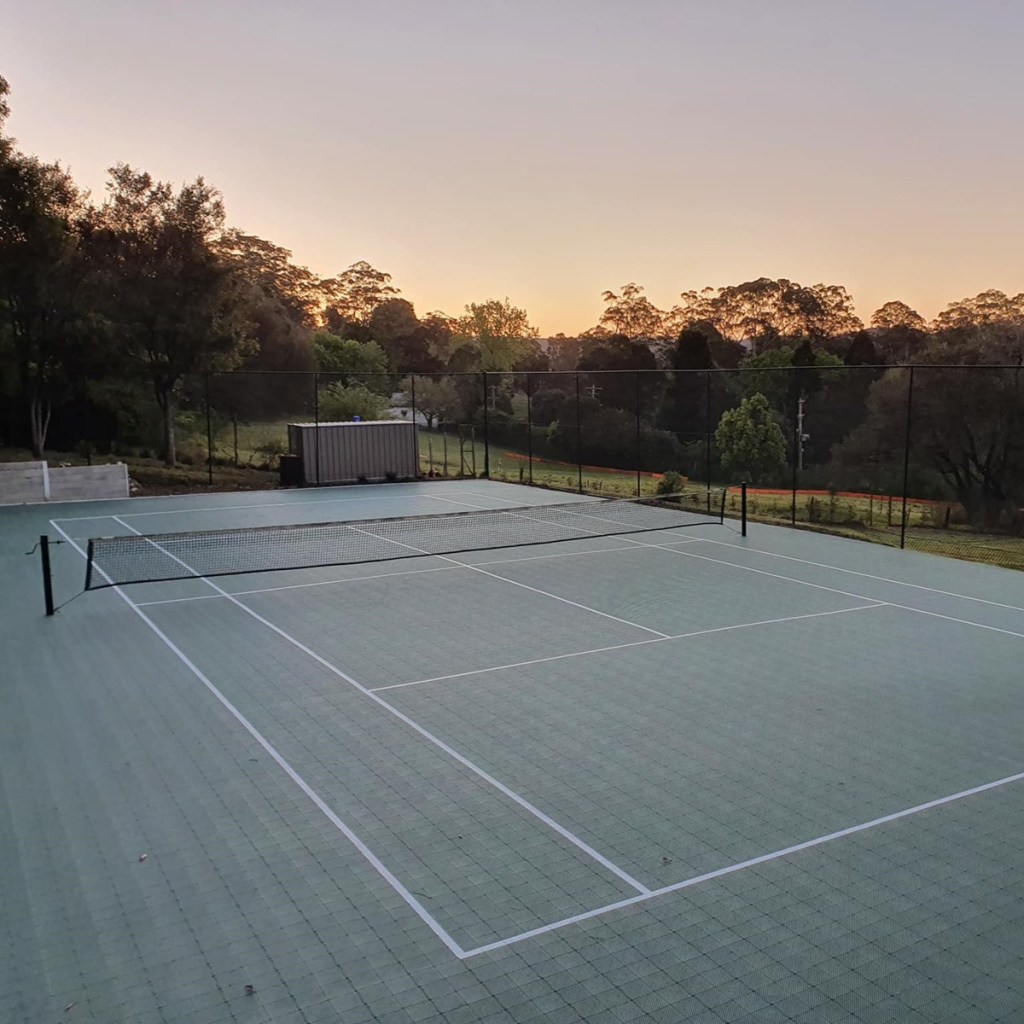
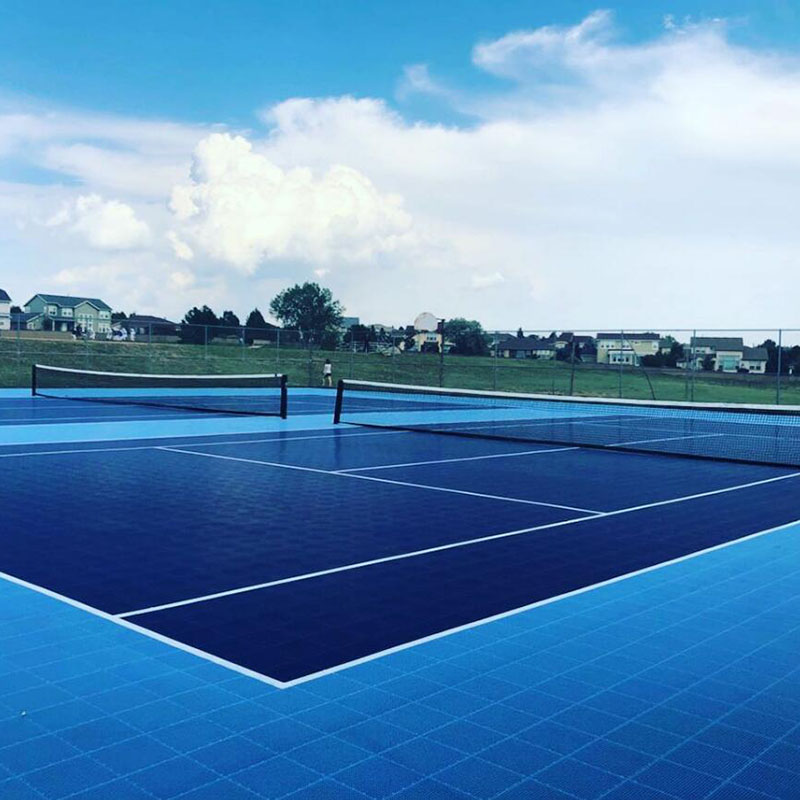
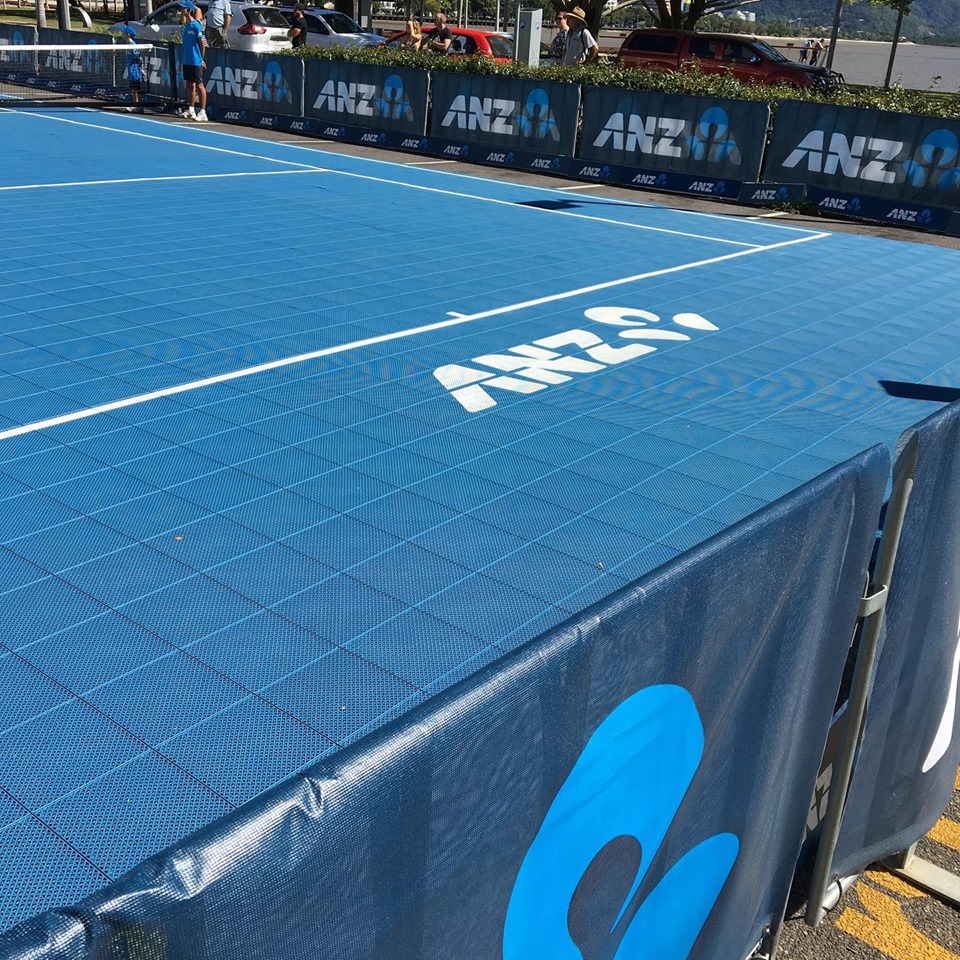
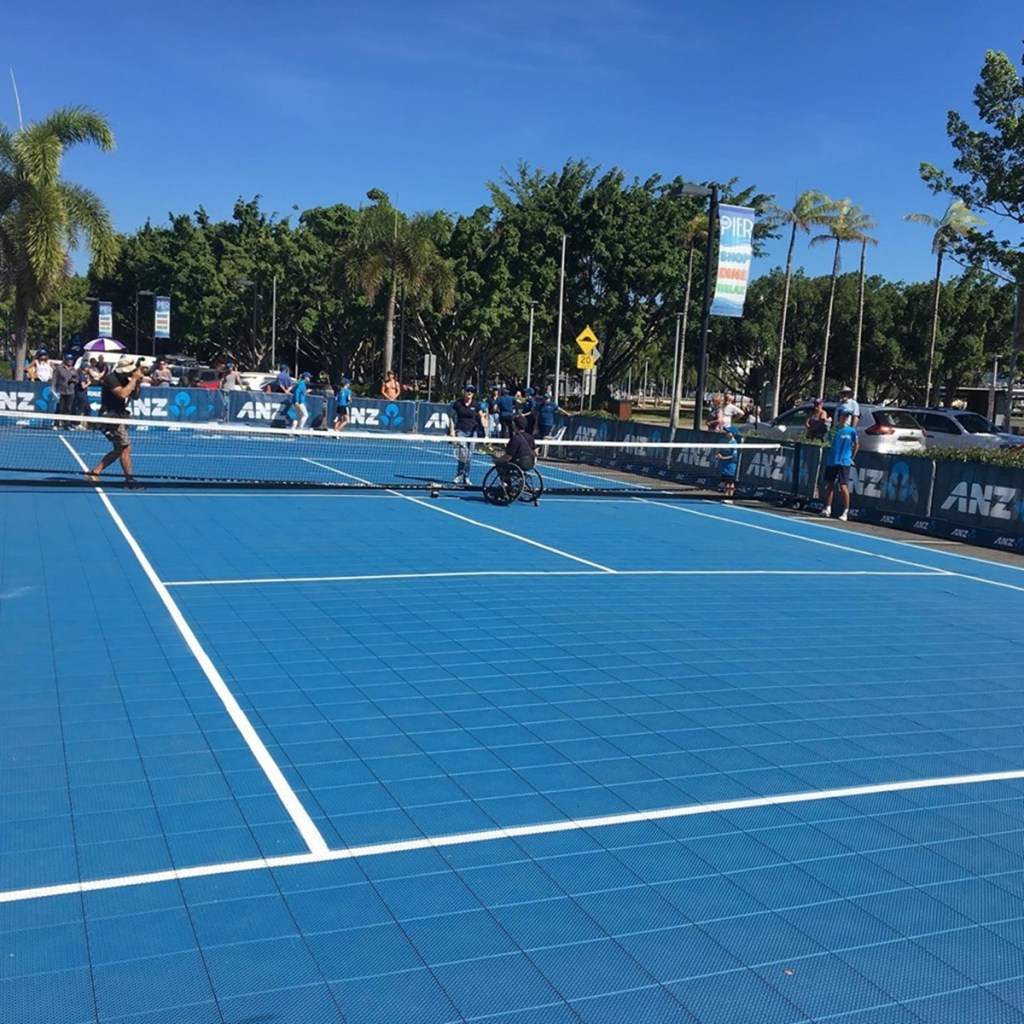
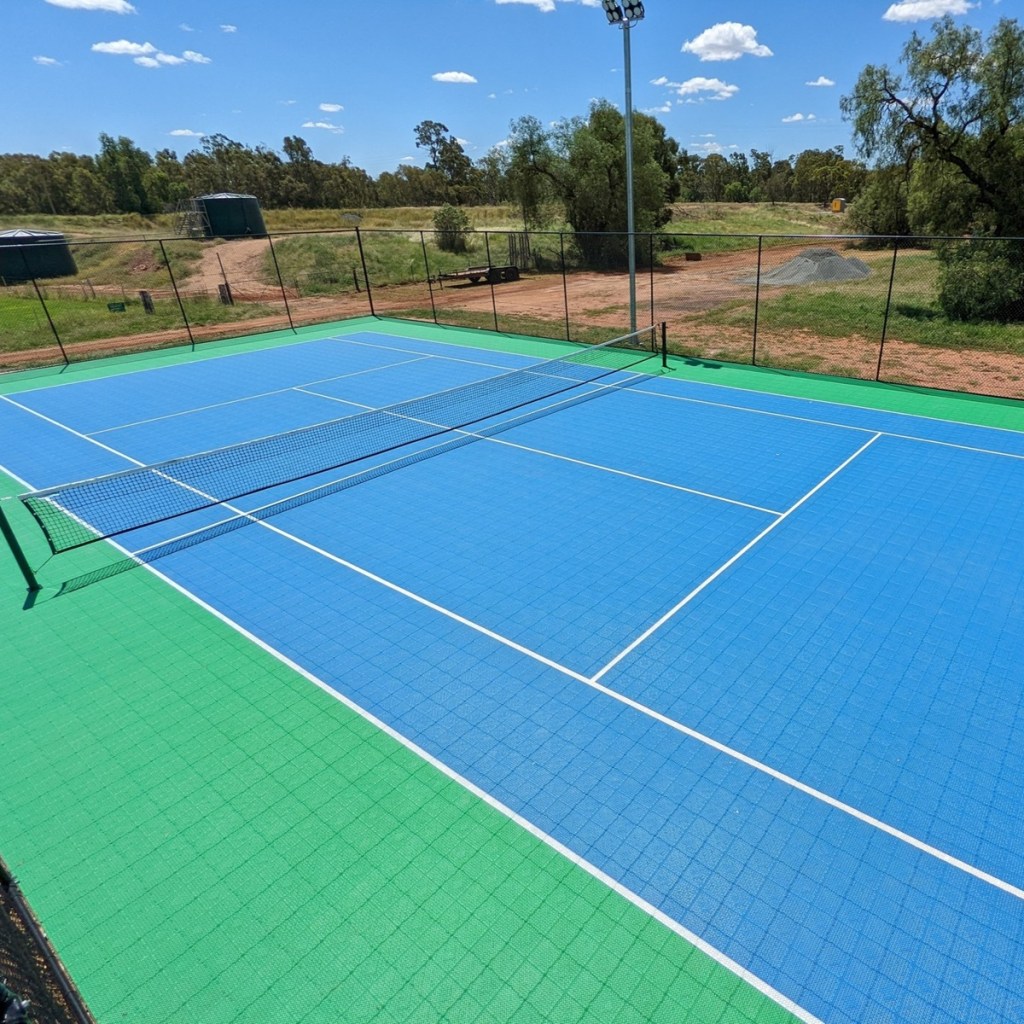
Modular floor court
Modular sports flooring is a new type of sports flooring that is environmentally friendly and has multiple advantages. The tennis court built with this flooring is both innovative and practical. This flooring has a variety of excellent properties and characteristics and is suitable for the construction and renovation of tennis courts in various environments.
Advantages:
- Modular sports floors are usually made of polypropylene (PP) materials, which are UV-resistant, wear-resistant, not easy to age, and have a long service life.
- The floor adopts an assembled design and can be installed in a few hours. Similar to carpet courts, it can be disassembled and reused many times.
- The design of the suspended structure enhances the elasticity and cushioning performance of the floor, which can reduce the pressure on the players' joints and muscles and reduce the risk of abrasions and sprains.
- It is suitable for a variety of environments, including indoors and outdoors, and the hollow design allows the court to dry quickly after rain.
Disadvantages:
- High-quality sports floors may be slightly more expensive, so the initial investment will be higher.